Thursday, September 28, 2017

Confessions of an Automationeer, Part 22: Unreal Returns

Confessions of an Automationeer, Part 22: Unreal Returns

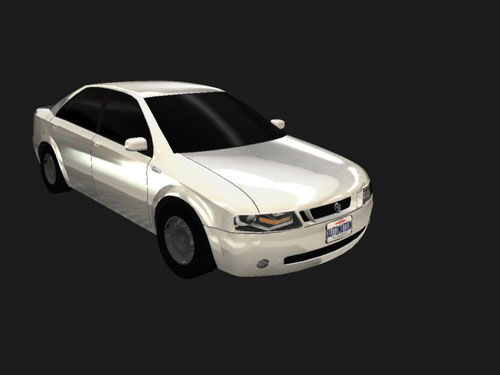
A recent update has rendered all of my UE4 Automation car designs obsolete, so I deleted all of them and remade the more notable car designs for lore's sake. The first car to be remade was, of course, the Morton Kestrel - the company's halo car and unquestionably one of its most attractive offerings. So how well did it turn out this time?


An overview of the remastered Kestrel.

To call the latest UE4 version much improved over the first public release is, quite frankly, an understatement. In a nutshell, everything not only looks better, but also works better thanks to improved balance. The presence of many new bodies and fixtures only adds to its appeal. Moreover, many scenarios from the Kee version have been carried over, with a few new ones thrown in for good measure. So what's not to like about the newest UE4 release?

As it turns out, there isn't much that needs to be improved - there are still many car bodies and fixtures which have not yet been ported over, but it's certain that this will be a priority for the developers. The addition of a campaign mode (another feature exclusive to Kee for now), meanwhile, seems like an inevitability given the pace at which the UE4 version is being developed. Those are my only complaints about it, though. In the meantime, I will continue to develop Morton's company lore. The most significant change is that there will be a new separate thread for light trucks and SUVs, while passenger cars will be described in the existing thread.

Monday, September 25, 2017

Confessions of an Automationeer, Part 21: Driving Through Time

Confessions of an Automationeer, Part 21: Driving Through Time


CSR rounds 49 through to 51 have all been period pieces, but not in the relatively modern eras of the '80s and '90s, which doesn't seem surprising considering that there have been enough rounds set in those decades, especially the more recent ones. So, the hosts of their respective rounds (CSR49-51) decided to step back even further in time than in more recent rounds. Given that there hadn't been many classic-themed CSR rounds of late, it seemed like a welcome change of pace and tone for this long-running series.

First up was CSR49, whose premise revolved around an affordable fun car to be sold in the 1974 model year - right in the middle of the first oil crisis. As such, the production unit and engineering time limits were low, but not to the point of taxing even the best Automationeers. There was, however, no upper limit on price, although fuel consumption and emissions both had to be kept to a minimum, in keeping with the economy-minded focus of the round. This inevitably resulted in the entry list becoming a disparate bunch of vehicles, from compacts to SUVs.

My response, the Kramer K23 Sprint, was very reminiscent of a Ford Capri - a two-door, four-seat, rear-drive coupe with simple underpinnings and a low price. Finished in a period-correct shade of orange, it seemed to look the part. And with a gutsy overhead-cam inline-six, it also had performance to match. Or did it?


This orange isn't quite as sweet as it seems...

Well, not exactly. It was slated for its wayward handling and thus immediately rejected, although its bland side profile and incongruously boxy lights on an otherwise well-proportioned shape didn't help. Equally unfortunate was that many other entries showed promise, only to be quickly discounted - with a dishonorable mention going to the otherwise attractive mid-engined sports coupe with an anemic inline-four under its engine cover. Certainly the client never wanted to buy anything other than an actual passenger car, and as such none of the SUVs and trucks entered in that round warranted a second look.

Nor did anything that provided insufficient performance, economy, comfort, or aesthetics for the client's needs. Ultimately, of the dozens of cars that were entered, only six finalists emerged, and each one balanced all four of those attributes better than the others.


The six finalists of CSR49: proof that the Malaise Era wasn't quite as bad as most people thought it was.

Of these six finalists, the Civera was the first to go - for something so comfortable and attractive, it was also an average performer with mediocre efficiency. The Kestrel was next to be cut; it was faster than the Civera, but too thirsty for the client, and the Comet suffered a similar fate. So that left third place to be claimed by the 2700C - a looker for sure, but still more expensive to run than anticipated. That left the Vindicator and Gladius; while the former was quite efficient (largely because it was front-wheel-drive), the rear-drive, targa-topped Gladius was even more economical and affordable, as well as being more fun to drive, thus giving it the win.

And so, after a trip back in time to the Seventies, it was time to go back even further for CSR50 - specifically, the first half of the 1950s. This time the client was looking for a car made during that era with a set of unique attributes to take on a dream cruise. Again the rule set was very open to interpretation, and being the car enthusiast that I am, I chose to build another two-door, four-seat sports coupe. As part of my plan to give some lore to a brand I had never used it before, I called it the Macale Madeira.


Stylish, innovative and fast - the Macale Madeira in a nutshell.

Unfortunately, the new client found it to be a bit too complicated for his tastes. Its dual-overhead-cam, 24-valve inline-six - a very advanced engine configuration for its time, and one that would not become commonplace for a few decades - was less reliable than anticipated, and the whole car was quite expensive too, especially since it had plenty of standard equipment for a car more than 60 years old. So he reluctantly passed it up, and continued his search for something that would suit him more.

One by one he reviewed the remaining cars, just as he had promised earlier. Some of them were, like the Madeira, unnecessarily complicated just for the sake of it, and would thus also be discounted - this was also true of any entries that didn't stand out from the crowd enough for his liking, or simply weren't fast enough. Others, thanks to the "uniqueness factor", would remain in the running for the time being. And so, once again, I waited with bated breath for the final results.

When they finally came I was pleasantly surprised. None of the dozens of sports cars featured in this round were shortlisted as finalists. Instead, the top three consisted of a much more diverse collection of vehicles. The Land Roamer Touring, a boxy off-roader, came in third place, behind the Znopresk Z1753. But even this stylish front-drive sedan was pipped to the post by the Canada Motors Yukon Luxoliner. This large, practical van had a 4x4 drivetrain for better capabilities over rough terrain, and as such would have been a great daily driver for those who did have an actual sports car for weekend drives. The jaw-dropping, chrome-laden styling was just icing on the cake. Whether or not it was pure coincidence that the round after this one involved building modern off-road passenger vans is still up for debate, though.


The finalists of CSR50: Uniqueness Above All. From top to bottom: Land Roamer Touring, Znopresk Z1753 and Canada Motors Yukon Luxoliner.

After the dust settled from the judging process, the next round's rule set came up very quickly. This time the client was looking for a muscle car - preferably with a big engine, lots of power and enough torque to do big, smoky burnouts - but most importantly it had to look good as well as be fast. Once again, I wasted no time building my entry, and to tie in with a later incarnation I had made for a previous round, it was called the Arrowhead GTX.


The Arrowhead GTX: Blending Brute Force with Refinement

Over the next week the entries kept piling in, and inevitably it was time to deliver a verdict on each one. Before the results were confirmed, though, any cars which did not follow the naming scheme strictly were immediately disqualified. As for the cars that weren't, anything that was too undrivable, uncomfortable, unreliable, impractical and/or unnecessarily complex was discounted right off the bat, and sadly my Arrowhead was among them. And as time went on, more cars also fell by the wayside, leaving just eight finalists. It is worth noting that the entry list contained three 4x4 trucks, but considering that the client wanted an actual muscle car, none of the off-roaders made the cut.

And what about the eight finalists still in the running? To be honest, determining a winner from this lot was the toughest part of the round. Or so it seemed, until the client applied the same formula for making the shortlist to the process of determining a winner. Once again, cars with insufficient performance, drivability, comfort or mechanical simplicity would have to be eliminated.


The finalists of CSR51 - can you spot the winner of that round? (Hint: it's the purple one)

After a while, three of the finalists remained in contention - the stripy, big, boxy and bright blue Boyd Solaris GP, the even stripier and mostly black NCC Zephyr, and the deep purple Contender +P. The latter fit the client's needs the most, and was thus chosen as the winner. It was an unsurprising decision, given that the Contender was more comfortable than the Solaris, and harder-edged than the Zephyr. And with that, CSR's trip back through time came to an end in a cloud of tire smoke.

Thursday, September 14, 2017

50 Years of the NMI Arrowhead: A History Lesson

50 Years of the NMI Arrowhead: A History Lesson

This post explores the 50-year history of the NMI Arrowhead, a fictional muscle car which has been in continuous production since 1968 in various guises. Among the many branded cars I have created in Automation, the Arrowhead holds a special place in my heart because it is the only model to be entered in CSR multiple times, albeit using different generations each time (with CSR 37 and 51 being contested by a fourth- and first-generation Arrowhead respectively). So without further ado, here is a brief rundown on each of the seven generations of this iconic pony car thus far. For the sake of simplicity, only the most significant new variants (not counting facelifts) will be featured here.

When National Motor Industries launched the Arrowhead in 1968, the public was stunned. For here was a pony car with a raft of advanced features for the class, such as independent rear suspension and 4-wheel disc brakes. Of course, any muscle car worth its salt needed a big, powerful V8, and the Arrowhead's displaced a whopping 7.5 litres - more than what the Big Three offered in their competitors. The result was an unqualified sales hit that would go on to terrorize the opposition for the next six years.


The Original Arrowhead: over-engined and all the better for it.

1974 saw a radical redesign, with a longer, sleeker wedge-shaped body incorporating pop-up headlights; however, the combination of catalytic converters and unleaded fuel resulted in a significant power decrease. Nevertheless, the Arrowhead II was hailed as one of the last bastions of the true muscle car at a time when they were few and far between. In a world where the Big Three had either neutered their pony car offerings or axed them entirely, NMI had the segment almost to itself. But once again, changing tastes meant that the Arrowhead II only lasted six years on the market before a new model arrived.


Longer, sleeker and sharper - that's the Arrowhead II in a nutshell.

In 1980, the Arrowhead III was released. This generation was the first to abandon the strut front/semi-trailing arm rear suspension configuration of its forebears for double A-arms all around for improved ride comfort and handling. Its angular shape was made of corrosion-resistant steel, but concealed a mildly reworked big-block engine with three small carburetors (as opposed to two large ones) that did not deliver much more power than the previous version. So, after just six years on the market, NMI embarked on yet another redesign, hoping to maintain the model's relevance in the marketplace.


Who needs curves when straight lines look this good?

The new-for-'87 Arrowhead IV introduced NMI's lighter small-block V8 to the lineup. Again, the power increase was slight, but the fitment of electronic fuel injection with individual throttle bodies dramatically improved throttle response compared to the previous model. Most obviously of all, the faceted shape of its predecessor was replaced with a much more curvaceous and aerodynamic profile. The resulting car was once again a best-seller for several years, ultimately becoming a favorite of weekend racers and highway patrol officers, the latter having been sufficiently convinced by the Arrowhead's reliability, affordability and performance to order them in large quantities for rapid response duties.


...actually, you do, and so does the Arrowhead.

After the introduction of the larger, sleeker and more aerodynamic Arrowhead V in 1993 (to coincide with the 25th anniversary of the original Arrowhead's launch) it was immediately apparent that NMI was keen on ensuring that this long-lived icon would be the best pony car on the market. Now running on premium unleaded, the 5.7L V8 developed over 300 bhp for the first time, with a less powerful 5.0L V8 also being offered, but only on the base model. It was heavier, too, but on the other hand, it was more comfortable than its forebears. In addition to new multi-link rear suspension and a Torsen LSD, the new model had an airbag for the driver and front passenger, while a six-speed manual became standard 18 months after launch.


The V stands for "velocity". That is all.

For 2003, the Arrowhead underwent a retro restyle, with styling cues that harked back to the original 1968-73 Arrowhead. Powered by an all-new all-alloy pushrod V8, this 400-horsepower muscle car was more than a match for the best imports - and much cheaper to boot. It was the first Arrowhead to be offered with sat-nav, either as standard fitment or as an option. From 2009, the flagship V8 trim was powered by a 6.2L V8, replacing the 6.0L unit used previously.


The '03 Arrowhead VI: Retro rocks!

After a decade in production, the retro craze had run its course, and the 2013 redesign brought sleeker, Euro-inspired styling, with a heavier use of alloy panels to minimize weight gain. This seventh-generation car had more standard equipment than ever before, but what really mattered was what lay under the hood: a 6.3L direct-injected V8 with variable valve timing and individual throttle bodies, a feature first used on the Arrowhead IV. 19-inch wheels wrapped in 265-section tires helped transmit all that power to the ground with minimal fuss via a six-speed manual or eight-speed automatic, both of which had automatic rev matching (although only the latter came with a pair of paddles). In short, while it was now more of a budget GT than its illustrious predecessors, it was still a true sports car at its core.


Leaner, meaner and greener (both figuratively and literally): the Arrowhead is back... with a vengeance!

So there you have it: the entire history of an all-American motoring icon, from the over-engined original to today's sophisticated all-conquering machine. But what does the future hold for the Arrowhead? Certainly the new model needs to be even faster and more efficient than the current one, and just as agile in the corners. Even so, a redesign is some way off in the future; until then, enjoy the Arrowhead while you still can!

Tuesday, September 12, 2017

Confessions of an Automationeer, Part 20: Anikatian Taxis

Confessions of an Automationeer, Part 20: Anikatian Taxis

CSR48 set new standards in story-writing and real-world relevance. In a nutshell, it was another period piece, and the winners of this round nailed the brief for it better than the opposition. So, without further ado, here is how it unfolded. This time, however, I will cut to the chase and briefly summarize CSR, without too many frills in the write-up.

CSR48 brought back pleasant memories for me; it had echoes of CSR27, in which the task was to submit a police cruiser for a small city's police department as a replacement for their existing fleet. To that end, CSR48 had a similar premise, except that instead of a police department, a national taxi company was requesting new vehicles for the 2001 model year. Given that the company in question was located in the newly democratic fictional country of Anikatia, the cars not only had to be durable, but also highly affordable. And with the fleet split into three divisions (general-purpose cars, large vans with more seats, and upmarket deluxe taxis), finding a business plan would possibly be more challenging than expected.

I wasted no time creating an entry, and true to form, threw the kitchen sink at it by giving it a direct-injected turbocharged engine with a water-to-air intercooler. The resulting car, the Fleet Industries Wayfarer, was a whopping 15 years ahead of its time, with its emphasis on downsizing and economy. It was cheap, too, but would it be enough?


The Wayfarer - the future of fleet vehicles? Not quite.

As it turned out, it wasn't. It was immediately rejected during the first round of cuts for being too complex in a round focused on mechanical simplicity. However, many other promising entries suffered the same fate, either for this reason alone, or for simply being too expensive, or both. Likewise, anything that wasn't comfortable enough for its business plan ended up being given the cold shoulder. By the end of the first round of cuts, just ten entries were left, but the elimination process had only just begun - and it would get even tougher from there.


The vans that didn't quite make it: the Curtis and TV1 SF-8

Of these, just three cars were deemed worthy of being suitable replacements for the national fleet; the rest were not quite as comfortable and/or affordable long-term as the fleet manager had hoped. This left a trio of vans, all of which were spacious enough to replace every regular and jumbo taxi in the fleet, along with most of the deluxe taxis. In the end, after a long, agonizing decision, the Ouarzazate (named after a Moroccan city) was declared the winner, but only just; the Curtis was more comfortable (although it was more expensive in the long run) and the TV1 SF-8 more advanced (but not too advanced). The Ouarzazate was so well-rounded in all aspects that the opposition hardly stood a chance.


The Ouarzazate - Cheap, efficient, reliable and spacious enough to be the new mainstay of the Anikatian taxi fleet.

Thus ended one of the few fleet-themed rounds in the history of CSR. But the next three rounds, also period pieces, would raise the bar even higher in all respects... A summary of those, however, will have to wait until my next post.

Sunday, August 13, 2017

Confessions of an Automationeer, Part 19: How To Have Fun With 35 Grand, Part 1

Confessions of an Automationeer, Part 19: How To Have Fun With 35 Grand, Part 1


Recently, Automationeers like us have reached a consensus that a post-markup price of $35,000 is the threshold at which a car can no longer be considered affordable. With this in mind, the creators of CSR have launched a new challenge which aims to discover how this modest budget can be utilized. Specifically, any cars entered in this highly open competition would require a trim year between 2013 and 2018 (as well as being currently on sale), have between 2 and 5 seats, not be a delivery or cargo vehicle (it was agreed beforehand that the car had to be competitive in at least one of several performance segments), and retail for between $17000 and $25000 without markups. In addition, it had to record a standing-start lap around either the Green Hell or Airfield Track faster than 8:30 and 1:25, respectively, and require premium unleaded petrol at most.

For the sake of sensibility, production units and engineering time for the engine and trim were all capped at 100 each, except for trim production units, which were raised to 150. The regulations also stipulated a maximum tyre profile of 35 at zero (in other words, normal) quality, a safety rating of >45 and a loudness rating of <60, as well as a maximum fuel consumption figure of <14L/100km, and no fiberglass bodywork, thus ensuring that each entry would have some semblance of civility in daily driving conditions. Also, each user could send only one car per company, and the presence of any sort of lore for the latter was highly recommended, though not actually required. Finally, all cars would undergo extensive road and track testing at a variety of venues.

Having read the rules and double-checked them, I set about building an entry. Contrary to expectations, I put light weight ahead of raw power, and to that end built a small mid-engined sports coupe with an all-alloy structure and engine. The resulting car, the Albury CMS-20, was powered by the most common performance car powerplant of the current era - a turbocharged 2.0-litre straight-four. However, it had been fettled and fine-tuned to deliver 300 horsepower, sent to the rear wheels via a six-speed manual gearbox and a limited-slip differential.


Albury CMS-20T: An Australian Lightweight with a Turbo Punch

Given that Albury Motors, which has a performance car heritage stretching for a half-century, is an Australian manufacturer best known for front-engined, rear-drive, V8-powered muscle cars, the CMS-20 was a pleasant surprise. Lore-wise, however, it was a logical decision considering that, by 2017, it had been several years since its predecessor was axed. But I was not content with entering just one car, and I had to change my approach for my other entry. Ironically, it would turn out to be very similar in ethos to the rear-drive V8 beasts Albury is best known for.

Thus the Harris Nimrod 5.0 Coupe, assembled in Northamptonshire, England, was born, and it couldn't be more different from the Albury. With a normally-aspirated V8 up front driving the rear wheels (again via a six-speed manual gearbox and a limited-slip differential) it had a more brutish character, but with four seats and a suitably sized trunk. It was also heavier, but had 50% more power.


Harris Nimrod 5.0 Coupe: Big, Bold, British and Brutally Fast

The most surprising thing about it was that it could reach an incredibly high top speed, considering its weight - it could reach over 190 mph given enough room. And while the Albury was more than 25% cheaper than the Harris, it was nowhere near as practical. As such, unlike the Harris, it was strictly a weekend track toy rather than a daily driver. Nevertheless, they were designed to be highly effective in their intended roles.

With the description of the contest and my entrants for it out of the way, all that was left to do was simply wait for the test results... But they have been delayed for long enough to make me create a new post for those. In the meantime, stay tuned...

UPDATE: As planned, Part 2 of this post will be delayed until further notice due to unforeseen delays in the judging for the entries. It has not been cancelled yet, however.

Thursday, August 3, 2017

Confessions of an Automationeer, Part 18: Yo-Yo Budgets

Confessions of an Automationeer, Part 18: Yo-Yo Budgets


CSR has had a wide variety of themes and budgets since its inception. Yet over the past seven rounds, each round has consistently alternated between entry-level and high-end cars, with just one exception (CSR44) in that period; that round allowed for the submission of mid-range cars, and indeed many of the submitted entries were exactly that. So why has CSR been on a roller-coaster ride in terms of price lately?

The answer, surprisingly, lies in the basic premise of CSR. By design, it is meant to be a realistic depiction of what a car buyer goes through before purchasing a particular kind of car, from subcompacts to hypercars. Given that each sector has a different budget, going up and down the price spectrum repeatedly makes plenty of sense. The upshot is that any users participating in CSR have to calibrate their skills depending on the maximum post-markup price, engineering time and production unit limits; as such, anyone who does not will be out of their depth as soon as they try to step out of their comfort zone, and may even be disqualified for being over budget (although it is also possible, and quite common, for an entry to be rejected for being too cheap).

However, I have managed to adapt well enough over the past few rounds to deliver a highly competitive entry in each case. In fact, three of them - the Albury Crusader II 5.7 Touring from CSR47 in particular, as well as the SMG CK60 and Albury Pilbara XP6, ended up as finalists, although they were more average than I intended, to the point that they were outclassed by more capable entries. From the above experience, therefore, flexibility from round to round is a vital asset for any CSR entrant. So if you are faced with any Automation challenge that forces you to step out of your comfort zone, by all means consider the necessary steps that must be taken before taking the plunge, and if you choose to do so, be sensible with your budget as well as your engineering choices.

Tuesday, August 1, 2017

Confessions of an Automationeer, Part 17: GrandTouring.Com

Confessions of an Automationeer, Part 17: GrandTouring.Com


While the UE4 version of Automation is being refined further, the previous Kee Engine version will remain in use for some time. As such, all community challenges continue to use it for now. To that end, CSR commenced its 47th installment, and in contrast to the previous round, which was all about building 2000 model year Kei cars for the Japanese market (itself the total opposite to the hulking great luxury SUVs featured in the round before that, in terms of both size and price), this latest challenge saw the entrants build fast, stylish and luxurious grand tourers in 1995, at a time when that particular sector was booming.

The cars had to be equipped with an automatic transmission, cost $55,000 with a 100% markup, and not be fitted with any parts that could not be mass-produced. With this in mind, I set about developing a suitable vehicle - and for the first time, I decided to adapt an existing model by creating a new trim. That car was the Albury Crusader II Touring, a plusher version of a wholly Australian-made two-seat sports car.


The Albury Crusader 5.7 Touring: For When You Have to Cross Continents Quickly And Comfortably

It was fitted with a more luxurious interior and a five-speed automatic gearbox (as stipulated by the rule set for this round), while the engine - a 5.7-litre pushrod V8 - was beefed up for improved reliability and performance. Revised suspension tuning - still with progressive springs and adaptive dampers, but nothing more complex than that - provided a more comfortable ride, while still retaining the sporty demeanor of other variants. Exterior changes were minimal: a more subdued metallic green exterior color, combined with a discreet lip spoiler on the rear, gave the car a more elegant appearance. Finally, additional quality points were used in certain trim components in an attempt to make the most of the budget I had to work with.

I chose the Crusader II out of respect for the brand's lore - before this round, Albury Motors had been represented only once in the history of CSR. To further justify my decision, I forewent the two test builds I made for this round - a hardtop coupe with an all-alloy quad-cam V8 and a convertible with a V12 - after realizing that they would be too heavy and unreliable to be as competitive as the Crusader could have been. The cost was, in fact, very similar in both cases, but otherwise it was not much of a concern.

With such a well-sorted package, it was no wonder that the Crusader passed the first round of cuts. However, anything with inadequate aesthetics, inappropriate mechanicals (such as a front-wheel drive configuration), or fitted with the wrong parts did not, especially if it looked and felt like it would be driven by a boy racer instead of a CEO. Also, cars which had been over budget, (in terms of cost, production units and/or engineering time) were immediately disqualified. One car was even rejected for being too fast, and another for looking too old! In fact, such were the demands of the customer that of the 27 cars submitted in CSR47, just 11 made the first cut; the Crusader was among them. From here on out, however, choosing a set of finalists, and eventually a winner, would be much more challenging.

Of the 11 finalists, one (the Wyvern) was immediately rejected for insufficient safety, leaving only ten cars. First to fall was the Crusader II, whose overhead-valve engine, though reliable, was simply outclassed by those found in other offerings. Next to go was the Erin Berlose, which simply had two more seats than was necessary. The Valiant, meanwhile, seemed to be a bit too fast for its own good. In addition to that, our client rejected the Sapphire and Eruption for excessive turbo lag - the boost came on too abruptly in both of these cars.

That left just five cars to consider. Of these, the first one to be cut was the Fleming Six, which felt rather dated - a deal-breaker for a man who prides himself on modernity. Surprisingly, the Spada 42 finished fourth; only the potential reliability concerns of its active suspension, and its bland styling, kept it from finishing any higher. Finally, the Ryujin and Vengeance were quickly dismissed for being too far under budget and having unusual styling, to say the least. And so, after a long, drawn-out process of elimination, there was only one car standing - the GBF Bellisa, whose quality, styling, and performance were all head and shoulders above the rest.


The GBF Bellisa, winner of CSR47. Belissima!

With the quest to find the definitive grand tourer of the 90s now over, it was time for me to relax... and make plans for the next round. What, then, will it be like? That's a question to be answered in a subsequent post.