Thursday, June 22, 2023

A Random Ship Build Generator for Infinite Space III: Implementation Using Spinner Wheels

A Random Ship Build Generator for Infinite Space III: Implementation Using Spinner Wheels

After creating and using several custom spinner wheel sets, I recently hit upon the idea of making one to serve as a random capital ship generator for use in the Combat Simulator mode of Infinite Space III: Sea of Stars. This one would need several spinner wheels: one for the faction to which the ship belongs, another to determine its size, and several for equipment choices. There would be four options for size (small, medium, large, and huge), and twelve options for factions (Terran, Zorg, Calatian, Muktian, Garthan, Urluquai, Tan Ru, Pirate, Klakar, Kawangi, Ravian, and Tchorak - if the last three of these options are spun, ignore any and all results from all equipment-related spinner wheels, and if Kawangi or Klakar are spun, ignore the effect of the Size wheel, since these factions are limited to one size of capital ship each).

On the subject of equipment, there should also be individual wheels for thruster, interstellar drive, shield, and special equipment options (a term referring to targeting computers, scanners, ECM systems, repair modules, cloaking devices, and navigation aids), the last of which can be spun up to three times for each random ship build, depending on the ship type. In addition to these, there should be two more spinner wheels: one for the range bracket in which the ship's weapons are most effective (short, medium or long), and one for various wild card effects, which would be as follows:
  • Change Faction: Respin the Faction wheel.
  • Change Size: Respin the Size wheel.
  • Change Thruster: Respin the Thruster wheel.
  • Change Shield: Respin the Shield Wheel.
  • No Special Equipment: Do not fit anything other than a shield generator to the ship.
  • All Slots Filled: Fill each and every equipment slot not occupied by a shield generator with anything you want.
And to determine whether or not the chosen wild card option is in effect, the last spinner wheel would have two options: Yes or No. If this wheel lands on No, none of the wild card options will take effect; otherwise, the selected wild card option must apply.

This concludes my rundown of the proposed Sea of Stars capital ship generator spinner wheel set.

Wednesday, June 21, 2023

Confessions of an Automationeer, Part 157: CEL Challenge Remix Expansion Ideas

Confessions of an Automationeer, Part 157: CEL Challenge Remix Expansion Ideas

Currently, my CEL Challenge Remix spinner wheel set (link here) consists of six wheels, similar to those in the original CEL Challenge, but with a different number of options for most of them. However, I am now considering expanding the CEL Challenge Remix even further by adding two additional spinner wheels to the existing six, for a total of eight. One of these will determine its exterior color; the other will determine the exact trim/variant year (for any Era option other than Oil Crisis).

The first of these new spinners, called Exterior Color, determines the exterior color that must be used for a randomly generated build, irrespective of its shine, flake, or pearlescent effect. Its options would be as follows:
  • Red
  • Orange/Brown
  • Yellow/Gold
  • Green
  • Blue
  • Purple/Pink
  • White
  • Silver/Gray
  • Black
  • Any (free choice of exterior color)
  • Respin (spin again)
The second spinner, titled Trim Year, would be used for selecting the required trim year for the build, referring to the final digit of its trim year. There would be 12 options for the final digit, as shown below:

  • 0
  • 1
  • 2
  • 3
  • 4
  • 5
  • 6
  • 7
  • 8
  • 9
  • Any (free choice of trim year)
  • Respin (spin again)
To tie in to this, the Lucky spinner wheel could gain four additional options: Change Color (respin the Exterior Color wheel), Change Year (respin the Trim Year wheel), Choose Any Color (replaces current Exterior Color by setting it to "Any"), and Choose Any Year (replaces current Trim Year by setting it to "Any"). With these changes in place, the number of possible specific combinations will increase even further. However, implementing them will also make the set more complicated than it already is. So although these revisions are still on the table, I will hold off on introducing them for now.

Thursday, June 15, 2023

A Lifer's Diary, Part 6: Examples of Playstyles

 A Lifer's Diary, Part 6: Examples of Playstyles


Having played the Game of Life for well over two decades, I have realized that players tend to fall into one or more different playstyles, which are reflected in the way they approach the game. With this in mind, I have coined terms for some of the more prominent playstyles, four of which are described below.
  • Money Grubber: This is characterized by using a high-paying salary (or, from Generation III onwards, a career which has such a salary) to maximize the amount of cash that can be earned by passing or landing on Pay Day spaces, while also aiming to collect as much additional money from Collect Spaces (or, from Generations IV and V, Action Cards that reward money instead of taking it away) along the way. However, it is less effective when used with less lucrative salaries.
  • Family Man/Woman: Players with this strategy prefer to have as many children as they can over the course of the game. This yields more children's gifts at the end of the game, allows them to earn more Life Tiles, or both, depending on the version of the game being played. However, in some versions, it runs the risk of having to pay more money if you land on certain spaces.
  • Lucky Investor: Using this playstyle requires a lot of foresight, since it requires buying a Stock/Long-Term Investment early on, and ensuring that its number is spun often enough throughout the game to make its purchase worthwhile. This can also happen in Generation V if a player chooses the right number when landing on an Invest space for the first time, and also in Generation IV with its Careers' built-in Lucky Numbers.
  • Slow Burner: A less salary-dependent strategy than the Money Grubber, relying heavily on accumulating large numbers of Life Tiles/Action Cards in general and maximizing resale value for any Houses owned to make up for any shortages of cash on hand at the time of retirement. At the end of the game, the cash value of these items will be added to the player's net worth, potentially taking them ahead of at least one opponent in the process.
The ideal strategy should combine elements of all (or at least most) of those playstyles, although it is possible, though more difficult, to win with a strategy that uses no more than one of them. But no matter what strategy and playstyle you choose when playing the Game of Life, be sure to have fun!

Monday, June 12, 2023

Confessions of an Automationeer, Part 156: A Simple Solution

Confessions of an Automationeer, Part 156: A Simple Solution

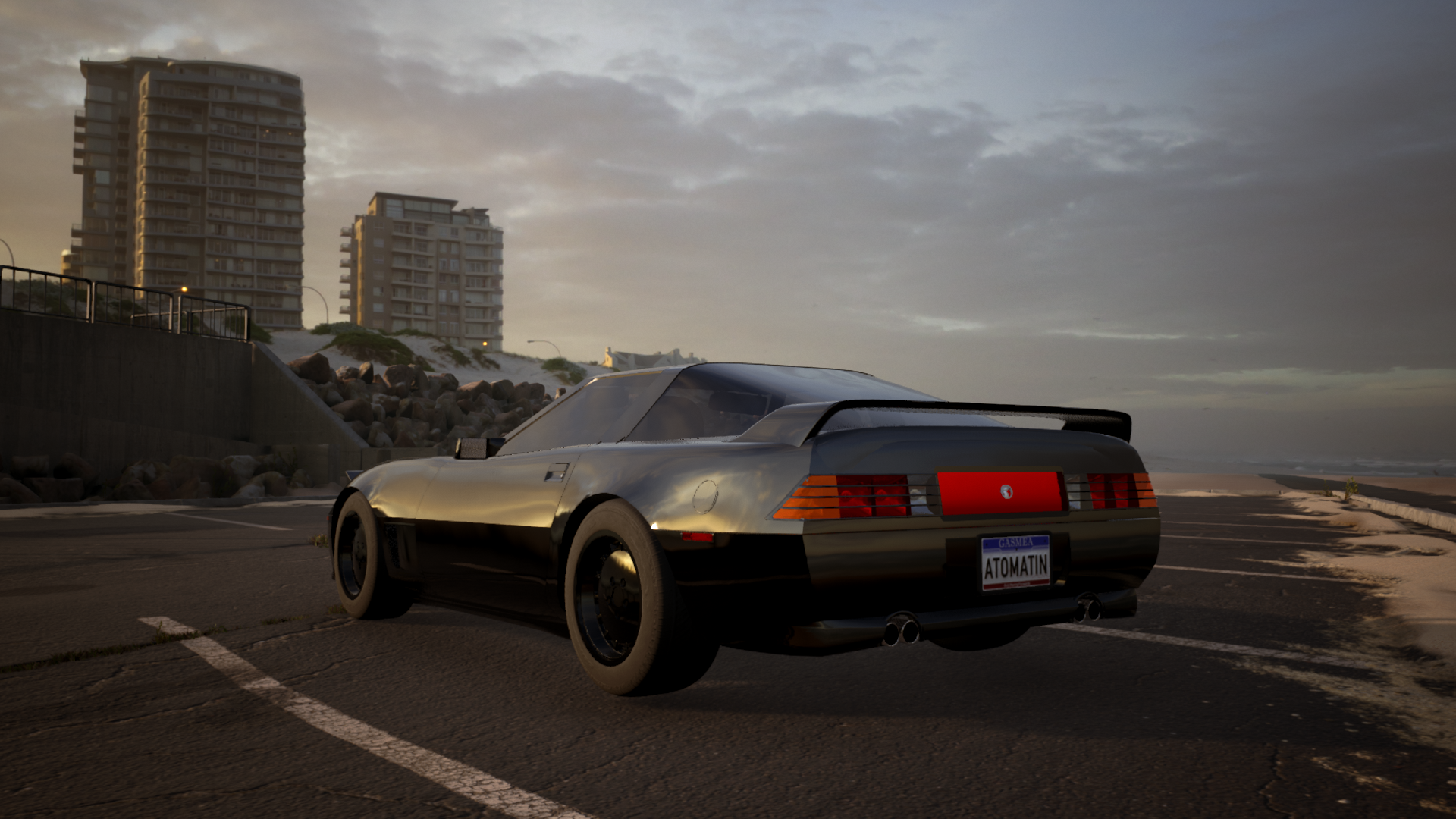
Recently, I challenged myself to make a car whose exterior design had a grand total of 25 fixtures in total, as a submission for a forum challenge limiting entries to 100 fixtures or fewer. This time, I used my CSR121 entry (the '94 GEC GS2 Turbo, an old build from an earlier version of Automation that has since been rendered obsolete by various game updates) as inspiration, but decided to reimagine it with a far simpler design (on a new, hugely improved version of the original car's body set) to comply with my chosen fixture limit. The resulting car, the 1992 GEC G2S Turbo 2.0, is shown below.


The GEC G2S Turbo 2.0 is a more minimalist reimagining of my CSR121 entry, built on similar principles.

The G2S Turbo is powered by a 200-horsepower turbocharged straight-four driving the rear wheels via a five-speed manual gearbox and a limited-slip differential, but we're here to discuss how I managed to squeeze just 25 fixtures into the design (which was actually quite coherent, by my own admission), not to explain its technical specs and performance stats. I used 9 fixtures at the front (2 wipers, 1 grille, 1 mirrored indicator repurposed as a fog light, and a headlight cluster comprised of 5 mirrored headlight fixtures), 4 fixtures on the sides (1 fuel filler cap, 1 radio antenna, 1 mirrored door handle, 1 mirrored side mirror) and 12 fixtures at the rear (5 mirrored headlight fixtures for the taillight clusters, 1 centrally mounted headlight fixture for a rear reflector, 1 taillight fixture for a central third brake light, 1 rear-mounted license plate, 1 exhaust pipe, and 3 body moldings - one shaped and placed like a small rear spoiler, another as an exhaust pipe cutout, and the last one serving as a license plate holder), for a total of 25 fixtures in all.

Overall, I liked how well this one turned out - even more so than my first submission for this challenge, with was entered in the 10-fixture category, and in hindsight felt very crude by comparison. The next most difficult category (which required a maximum of 25 fixtures - there are also categories for cars with up to 50, 75, and 100 fixtures, respectively) felt more suited to my skillset, so I chose that one for my second submission. After looking at the G2S a second time, I reckon that its exterior design could easily be developed further into a more highly detailed build with more fixtures, possibly even incorporating a fully 3D interior (which the base model does not have). For example, adding front and rear badges, as well as a front license plate, and some additional body moldings on the sides and front (if I choose not to install any functional aerodynamic fixtures) would only require five more fixtures in total, bringing the fixture count up to 30. Even so, I am happy with this build, especially given the fact that the original GEC GS2 required 29 fixtures - four more than the G2S shown here.

Wednesday, June 7, 2023

Confessions of an Automationeer, Part 155: A Question of Legality

 Confessions of an Automationeer, Part 155: A Question of Legality

I have already mentioned the incompatibility of certain CEL option combinations in an earlier post in this series, but I have felt it necessary to bring it up again after realizing that it reminds me of the Illegal Design quirk in BattleTech. For example, the Lucky option "AWD" (which refers to AWD drivetrains, not 4x4) forces the build to have an AWD configuration; however, this is not possible for any car whose trim year is 1980 or later, after adjusting for drivetrain techpool allocation (up to +15). As such, if the Era option is either "1940s" or "1950s", and the Lucky option is "AWD" (assuming it takes effect, which occurs if the Luck option is either "Lucky" or "Both"), then the resulting build will be impossible to develop in Automation; however, if the Era option is "1960s" or "1970s", such a combination will only be possible if the trim year is 1965 or later (and even then, only with at least +1 techpool for the drivetrain, depending on trim year). Similarly, if the "Automatic" Unlucky option (which requires fitment of a standard automatic transmission with 3 speeds or fewer) is combined with the "1940s" Era option, the two will be incompatible with each other without a drivetrain techpool setting of +1 or more (depending on trim year, since the model/family year cannot be earlier than 1946). Most annoyingly, however, the CEL Challenge spinner wheel set gives no explicit onscreen confirmation that such combinations are impossible to create in Automation - you'll have to play the game yourself to find out.

Given that illegal builds can result from a CEL Challenge combination, it is unsurprising that BattleTech also has a Design Quirk for such an occurrence, called Illegal Design. Any unit with this quirk will not only break the normal construction rules, but also receive a penalty to all repair and modification dice rolls. In addition, this quirk must be combined with the "Obsolete" quirk upon the year of its introduction, and use of illegal designs require specific content from all players in the game in which it is used. When playing under the faster-paced Alpha Strike rule set, the quirk also doubles the penalties for having the "Obsolete" quirk, quintuples its base price, and prevents affected units from being replaced by identical ones in a campaign, in addition to causing them to be destroyed upon a Repair dice roll of "2". The Champion LAM (LAM being an acronym for Land-Air 'Mech) is an example of an illegal design, being based on a heavy 'Mech but fitted with the conversion mechanism required to turn it into a Land-Air 'Mech; it never entered service due to being very heavy for a LAM, leading to underwhelming performance, as well as rapid wear and tear on its conversion systems.

In the CEL Challenge spinner wheel set, if an illegal combination of results is generated, you can choose from one of two solutions: either adjust the techpool allocation accordingly (if possible), or generate a new combination, thereby ignoring the current one. In BattleTech, however, if any players object to the use of an illegal design before a game, then it cannot be used in that game (without any exceptions), and must be replaced by a legal one. In both cases, the possibility of illegal designs cannot be avoided completely, but it can be made less likely to occur.

Saturday, May 20, 2023

Confessions of an Automationeer, Part 154: The Quirks of the CEL Challenge

Confessions of an Automationeer, Part 154: The Quirks of the CEL Challenge


After generating hundreds of different combinations through the original CEL Challenge spinner wheel set (and doing the same for my take on it, which I called the CEL Challenge Remix), I realized that the various options in the Lucky and Unlucky wheel are reminiscent of the Design Quirks from BattleTech. Put simply, a Design Quirk in BattleTech is an optional rule that affects a unit's performance. In the CEL Challenge, the Lucky and Unlucky options (which are linked to where the Luck spinner lands on) have a similar effect when applied to cars made in Automation. 

Whereas a Lucky option generally benefits a car (much like a positive Design Quirk in BattleTech improves a unit's effectiveness in combat), an Unlucky option usually hinders it, just as negative Design Quirks in BattleTech reduces a unit's abilities. For example, in the CEL Challenge, the "Unlimited Fixtures" option ensures that there is no limit to how many fixtures you can place on a car (both on the exterior and interior), whereas the "Lowest Fuel" option forces you to use low quality unleaded fuel (85 RON); similarly, in BattleTech, the "Ubiquitous" positive Design Quirk makes it easier to find spare parts for a given unit (by virtue of it having been in mass production or centuries and/or having a manufacturer dedicated to making spares for it readily available), whereas the "Bad Reputation" negative Design Quirk halves a unit's resale value (without affecting its operability or purchase price). 

Some of the Luck options in the CEL Challenge are incompatible with others, much like BattleTech has a set of invalid Design Quirk combinations. For example, in the former, the "Unlimited Budget" (no maximum price) and "12k Costs" (maximum approximate price of $12,000 AMU as shown in the Markets screen in the Overview tab) contradict (and hence cannot be combined with) each other, whereas in the latter, the "Poor Targeting" negative Design Quirk cannot be combined with any positive Quirks related to targeting. Additionally, the "+15 Quality" and "-15 Quality" options in the CEL Challenge are incompatible with each other, but override all other quality-related options ("-5 Quality" and "+5 Quality"). Finally, just as Design Quirks in BattleTech have a point value (a positive amount for positive quirks and a negative amount for negative quirks), the various Luck options in the CEL Challenge generally affect a car's price when applied (although there are some exceptions, such as the "Change Class" and "Change Location" options, which require you to spin the Class and Location spinners, respectively, once more, thus replacing the previous result for the corresponding spinners).

In short, Luck options in the CEL Challenge are a nice addition to the game, just as Design Quirks add extra variety to the various units of BattleTech. In both cases, they may be optional, but when used, they make the game more challenging and rewarding, especially for more experienced players.

Friday, May 5, 2023

Confessions of an Automationeer, Part 153: On the Road to Hell and Back

Confessions of an Automationeer, Part 153: On the Road to Hell and Back

My victory in CSC56 gave me all the motivation I needed to host CSC57. For this challenge, the theme would be about a replacement for the 1984-vintage SVM Hellblazer I submitted in the fourth and final stage of the second Journey of Ownership tournament. The premise was that the basic platform and engine for the new Hellblazer (which had been earmarked for the 1995 model year) had already been signed off, but none of the company's designers could agree on a suitable exterior design, which therefore had to be outsourced. Whatever it was, however, it would have to be front-engined and rear-wheel-drive.


Above, from top: The outgoing Hellblazer, introduced in 1984, had a strong following and a good reputation, but was showing its age by the time its replacement began development. 

I set a two-week submission period, and waited for others to submit their designs. As time went by, the entries started slowly trickling in, and within a fortnight, I had received nine entries - almost twice as many as were entered in the previous CSC. When I finally got around to ranking the proposals, I had to reject most of them for looking too outdated, having poorly proportioned features, or just not fitting the brief. However, three designs - a red design that modernized its predecessor's design language, a blue one that took a more minimalist approach, and a green one that used a different car body set and had a more dynamic appearance - stood out for nailing the brief more convincingly than anything else, and they duly advanced to the finals.


Above, from top: The top three design proposals I received during CSC57. The first one was pleasingly minimalist but needed a bit more flair; the second one was a conservative, yet successful modern interpretation of the previous Hellblazer's design language, and the last one (which I crowned the winner of this challenge) had an even more dynamic and curvaceous look - a by-product of using a different (and newer) body set that none of the other entries was based on.

In the end, I went for the car with the bright green exterior color and double-bubble roof - small details such as this helped it get the nod over the other two finalists. As a postscript, it went into production with very few changes, and would go on to have a long and successful life, boosting SVM's image in the process.


Above, from top: The production version of the new-for-'95 SVM Hellblazer as seen from various angles.

Overall, I was very satisfied with how I hosted a CSC for the first time, and was deeply impressed at the quality of design work present in most of the entrants' submissions. Here's hoping the next CSC maintains the high standard set by the current one, after the two previous rounds had an unusually low turnout with no more than five entrants each.